
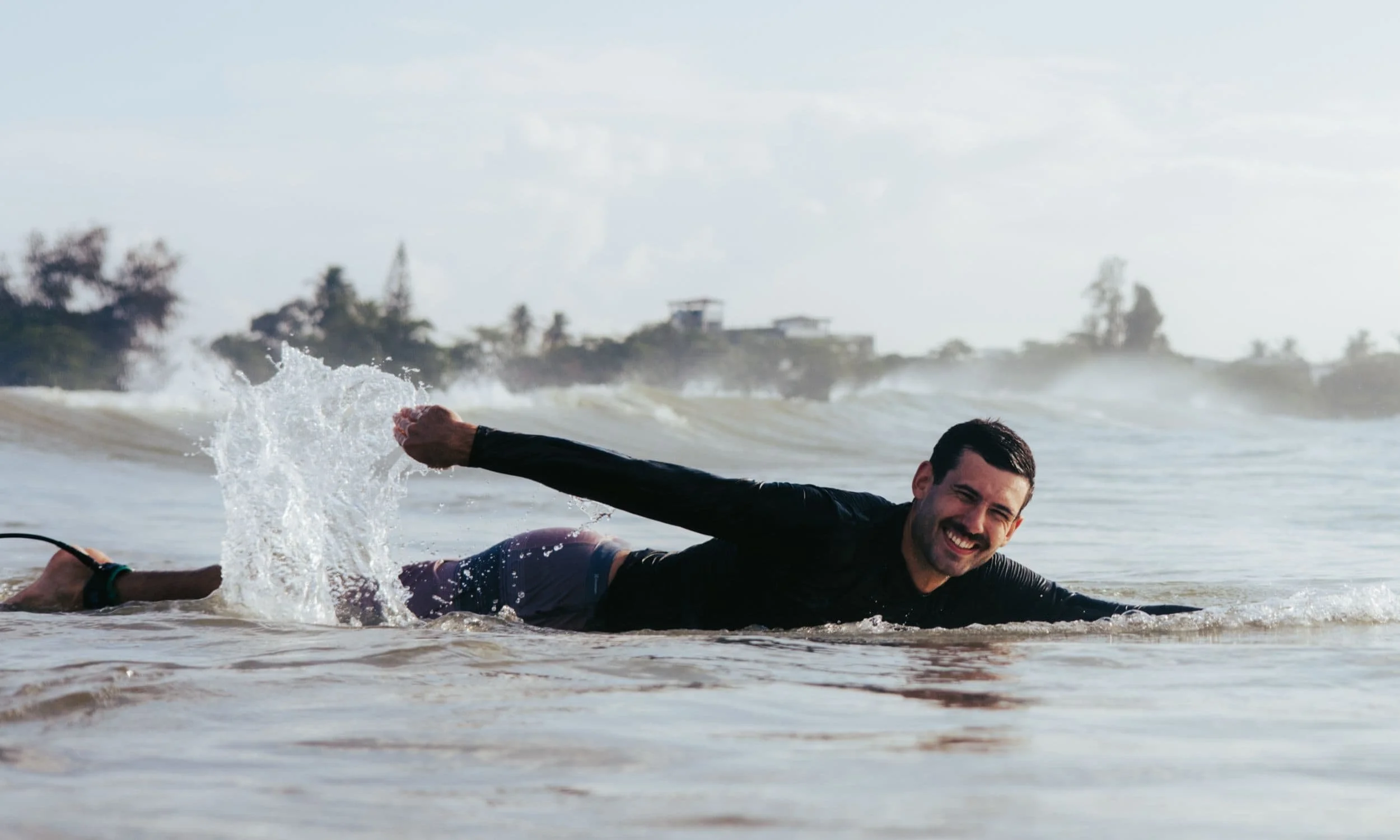
Ready to Move Beyond the Whitewater?
You've learned to get to your feet. You're becoming more comfortable on your board. Maybe you've started catching whitewater on your own, no assistance needed. And now you're looking out towards the unbroken waves, thinking: I want to surf those.
Explore Surf PackagesLess assistance. More independence
Welcome to Green Wave Progression, the stage between beginner surfing and becoming a more independent surfer in the lineup.
It's where you begin learning to read waves, position yourself, paddle into unbroken waves, take off in the right direction and surf along the open face.
More understanding. More independence.
The bridge between beginner and intermediate surfing
Learning to stand up is only the beginning. The next big step is learning how to catch and surf unbroken waves, and suddenly there's a lot more to think about. Where should you sit? Which wave should you choose? Where is it going to break? When should you start paddling? Are you too deep, or too far outside? Which direction should you take off?
This is why moving from whitewater to green waves can feel like such a big jump. Green Wave Progression is designed to help you make that transition one skill at a time.
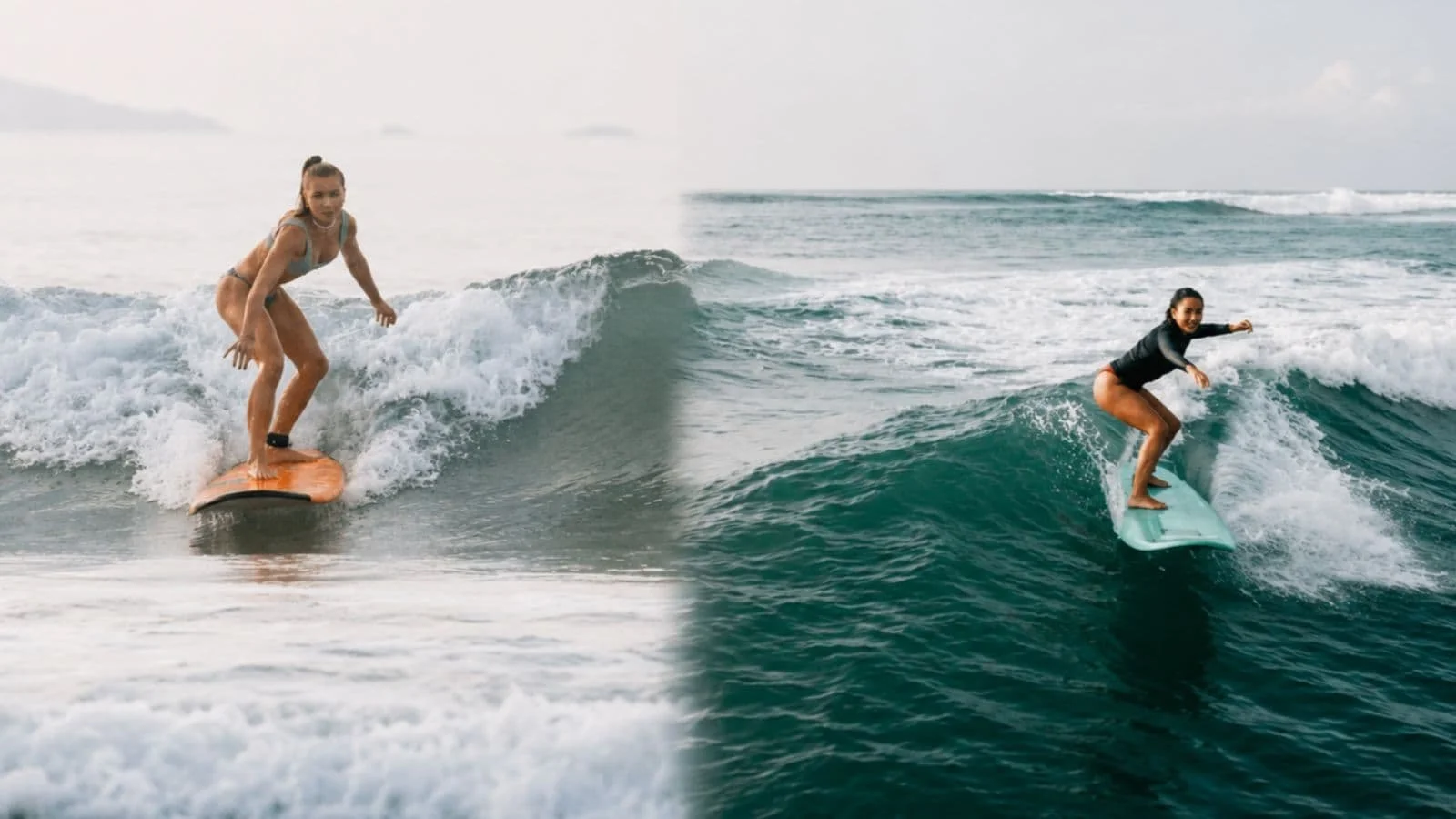
Is This Level Right for Me?
Green Wave Progression could be right for you if you can already do several of these things. You don't need to be able to do everything perfectly, that's why you're here.
And you don't need to decide your level perfectly before arriving either. Your coaches will assess your surfing and make sure you're working with the group that best matches your current ability.
From Whitewater to Open Face
This transition doesn't happen in one perfect session. Some days you'll catch green waves. Some days you'll miss them. Some days you'll paddle for everything and catch almost nothing. That's normal. The goal is to start understanding why.
You're Not Just Learning to Stand Up Anymore
At this stage, surfing becomes much more about decision-making.
Wave Reading
Start recognising peaks, shoulders, wave direction and how a wave is likely to break.
Wave Selection
Learn that not every approaching wave is a wave you should paddle for.
Positioning
Understand where you need to be relative to the peak and how small changes affect your chances.
Timing
Learn when to turn, when to start paddling and how to prepare before the wave arrives.
Paddling
Develop better technique and learn to create enough speed to match an approaching wave.
Take-Off
Move from simply getting to your feet to taking off with more control and choosing your direction.
Surfing Down the Line
Start using the open face of the wave rather than travelling directly towards the beach.
Lineup Awareness
Begin understanding where other surfers are sitting, who has priority and how to move safely.
Catching a Green Wave Starts Before You Paddle
One of the biggest changes at this level is realising that catching a wave isn't only about paddling harder. A successful wave often starts much earlier.
Our coaching groups stay small so your coach can watch what you're actually doing. They can see when you're sitting too far outside. When you're paddling too late. When you've chosen the wrong wave. When your board isn't pointing in the right direction. And when you've finally put everything together and caught that wave completely by yourself.
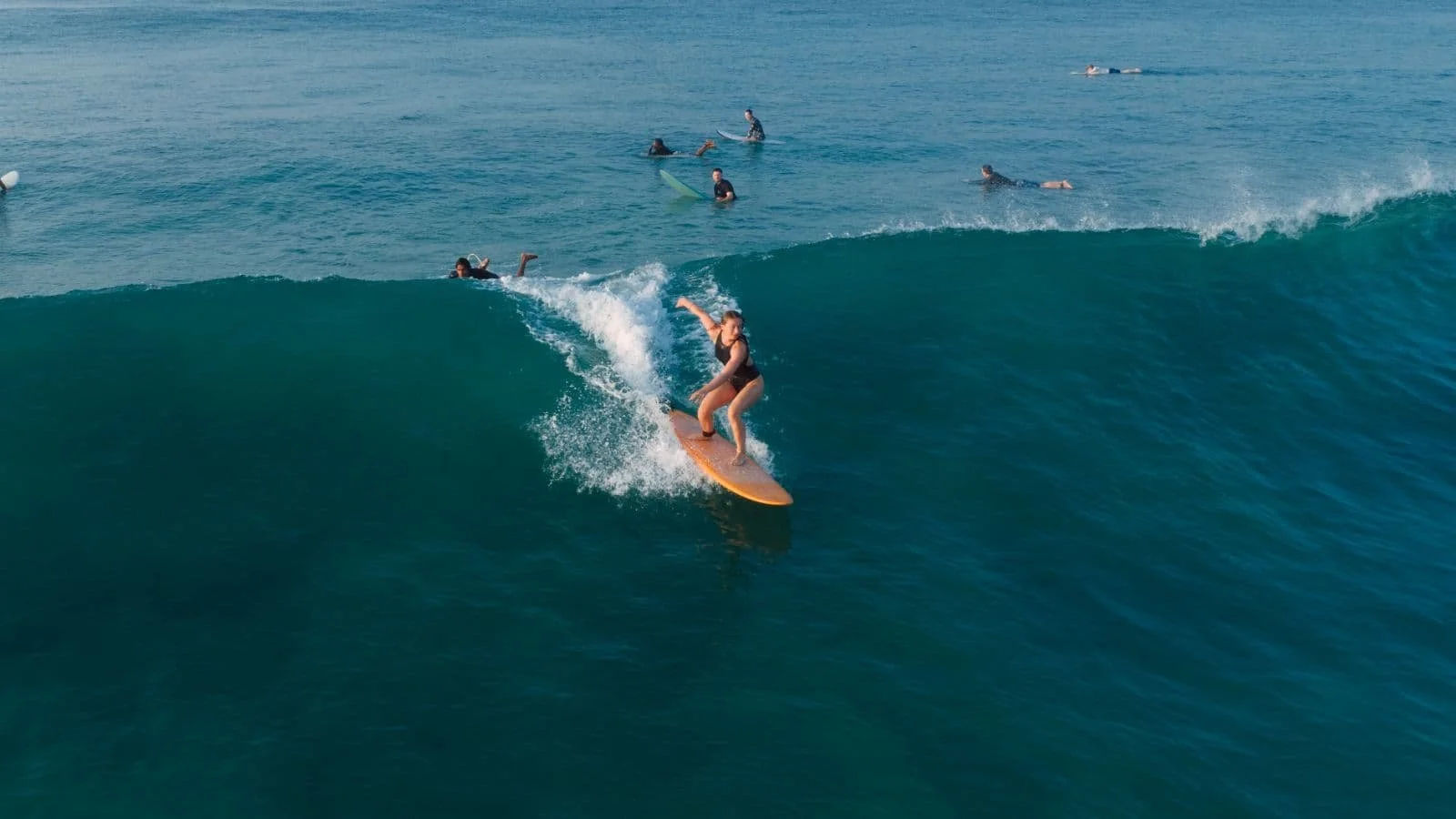
Learning to Read the Ocean
This is where surfing starts becoming more than technique. In the whitewater, waves come to you. Once you move into unbroken waves, you have to find them.
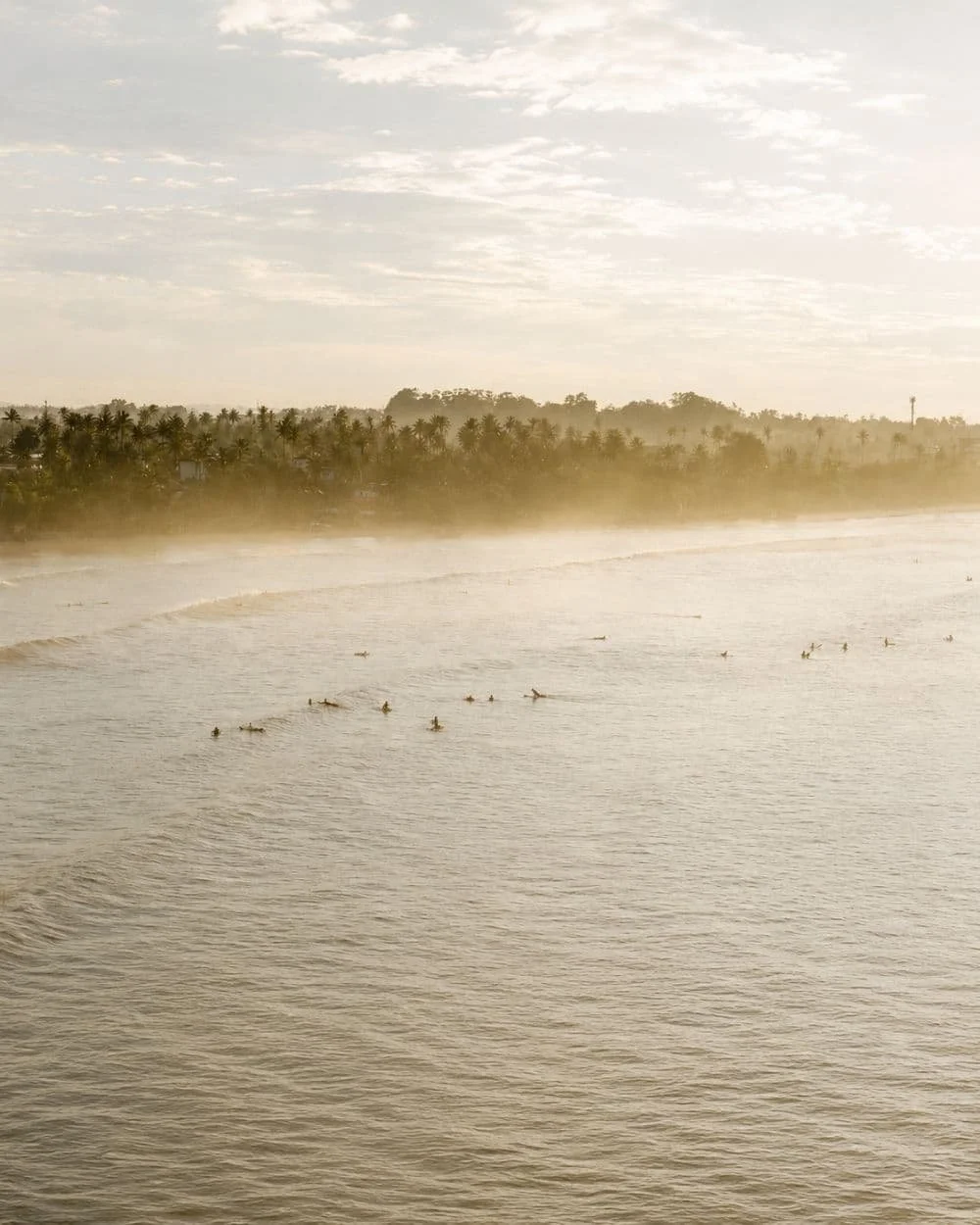
- The PeakWhere the wave begins to break.
- The ShoulderThe unbroken part of the wave you want to surf towards.
- Wave DirectionWhether the wave offers a left, a right or both.
- Sets & LullsWhy waves arrive in groups and why the ocean sometimes suddenly goes quiet.
- Changing PeaksWhy the perfect place to sit five minutes ago might not be the perfect place now.
- Other SurfersHow the lineup itself can help you understand where waves are breaking.
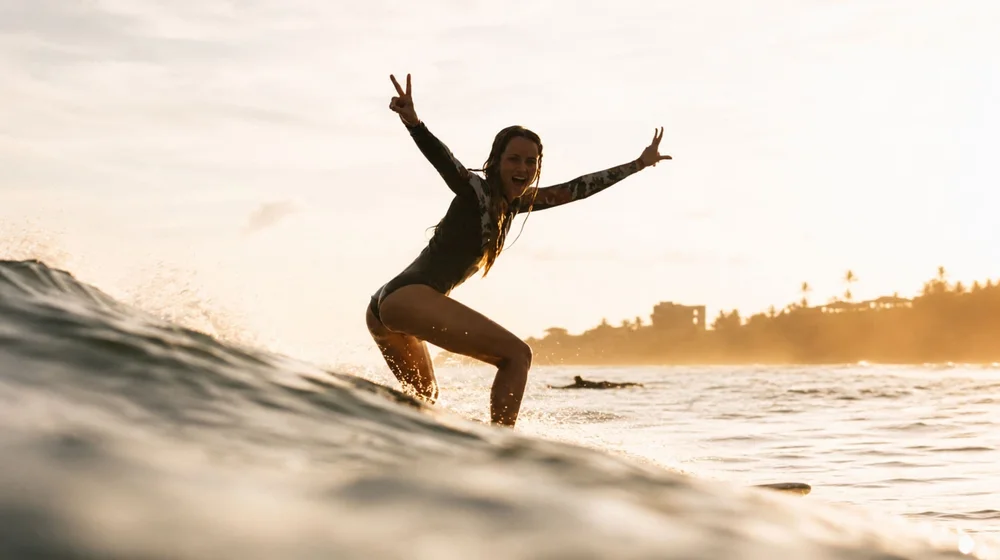
Oh. This is surfing
You see it coming. You turn. You paddle. You feel the board accelerate. You get to your feet. And instead of whitewater pushing you towards the beach, there's an open wave face beside you.
Where Will We Surf?
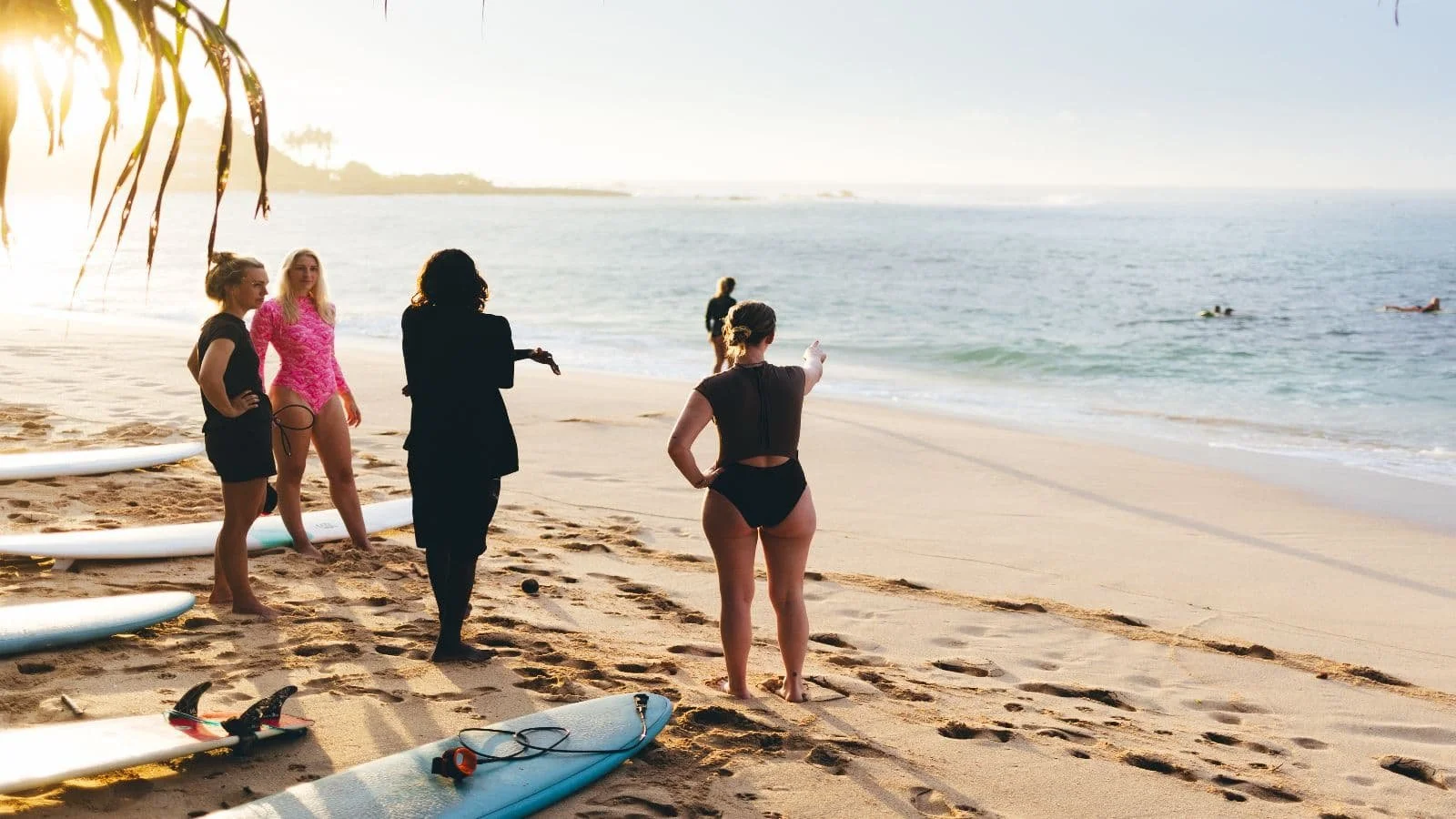
The best place to practise green waves isn't necessarily the same every day. Your coaches look for conditions that give your group the right opportunity to progress without putting you into waves you're not ready for.
Some sessions may take place in Weligama. As your surfing develops and conditions allow, other locations along Sri Lanka's south coast may also become suitable. We don't move surfers to a different break simply because it sounds more exciting.
See what you can't feel
At this level, small details start making a big difference. You might feel like you're paddling early, the video shows you're starting two seconds too late. You might think you're taking off at an angle, the video shows your board pointing directly towards the beach. You might feel like you're positioned perfectly, the camera tells a different story.
Video analysis helps connect what you feel with what's actually happening. Together with your coach, you can review your positioning, paddling, take-off, stance and what happens once you're on the wave.
Discover Video Analysis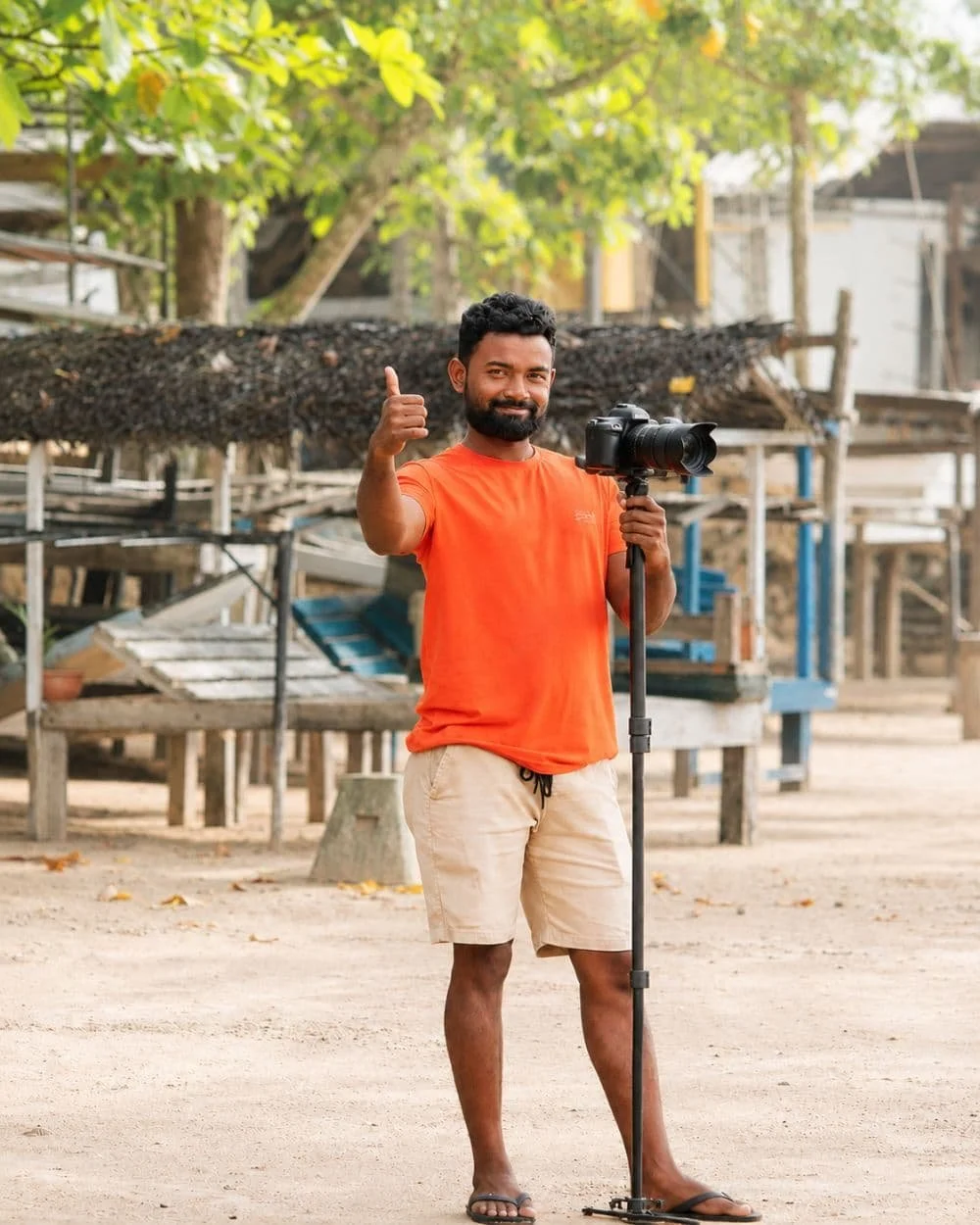
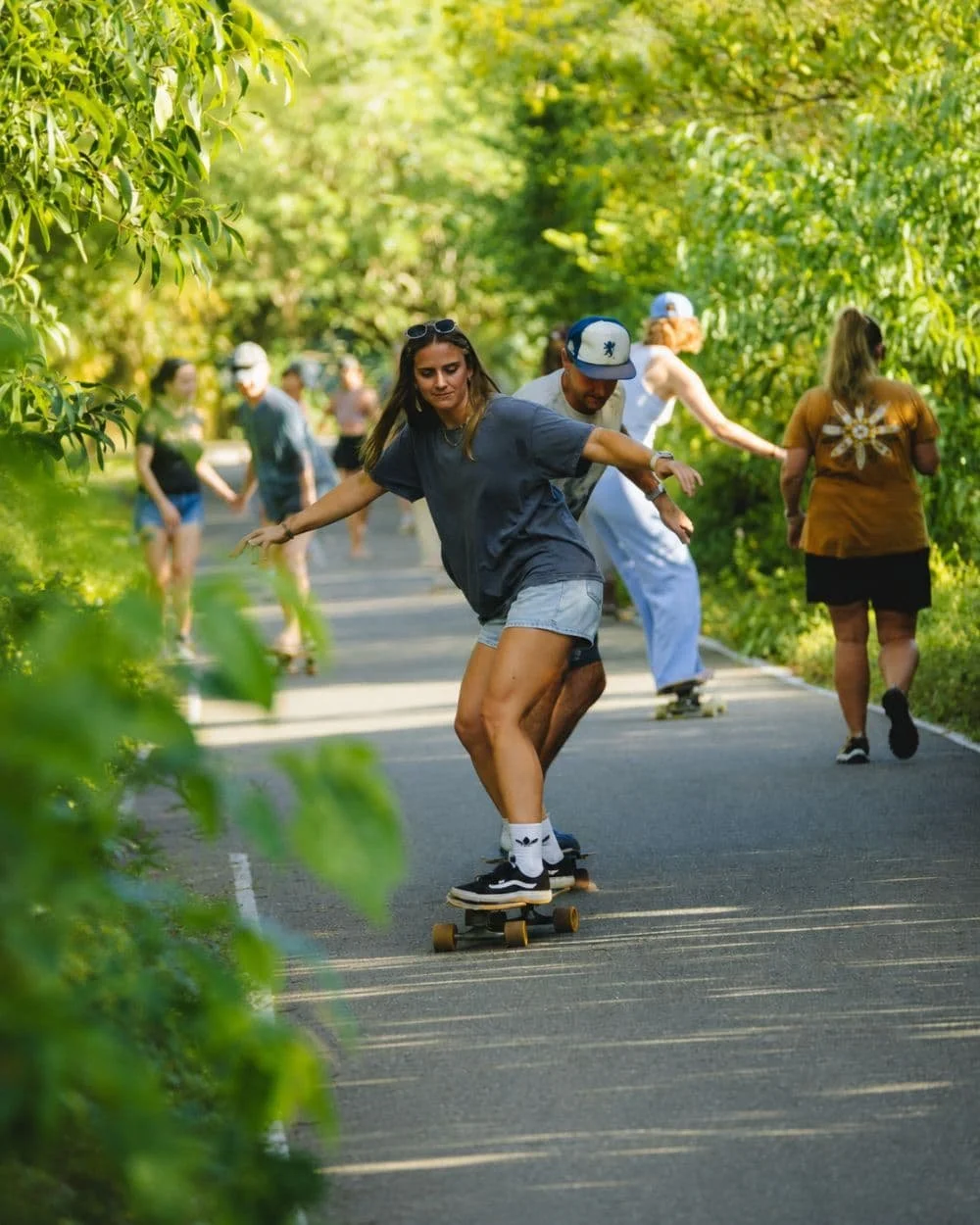
You don't need a wave to practise
The ocean doesn't give you unlimited attempts. Surfskating does. You'll have free access to our surfskates throughout your stay to practise body position, weight transfer, and looking where you want to go, the movements that eventually develop into better turns and speed generation. We sometimes bring surfskates into training sessions too, and our coaches often join guests for a skate session just for fun.
A controlled space to fine-tune what you already know
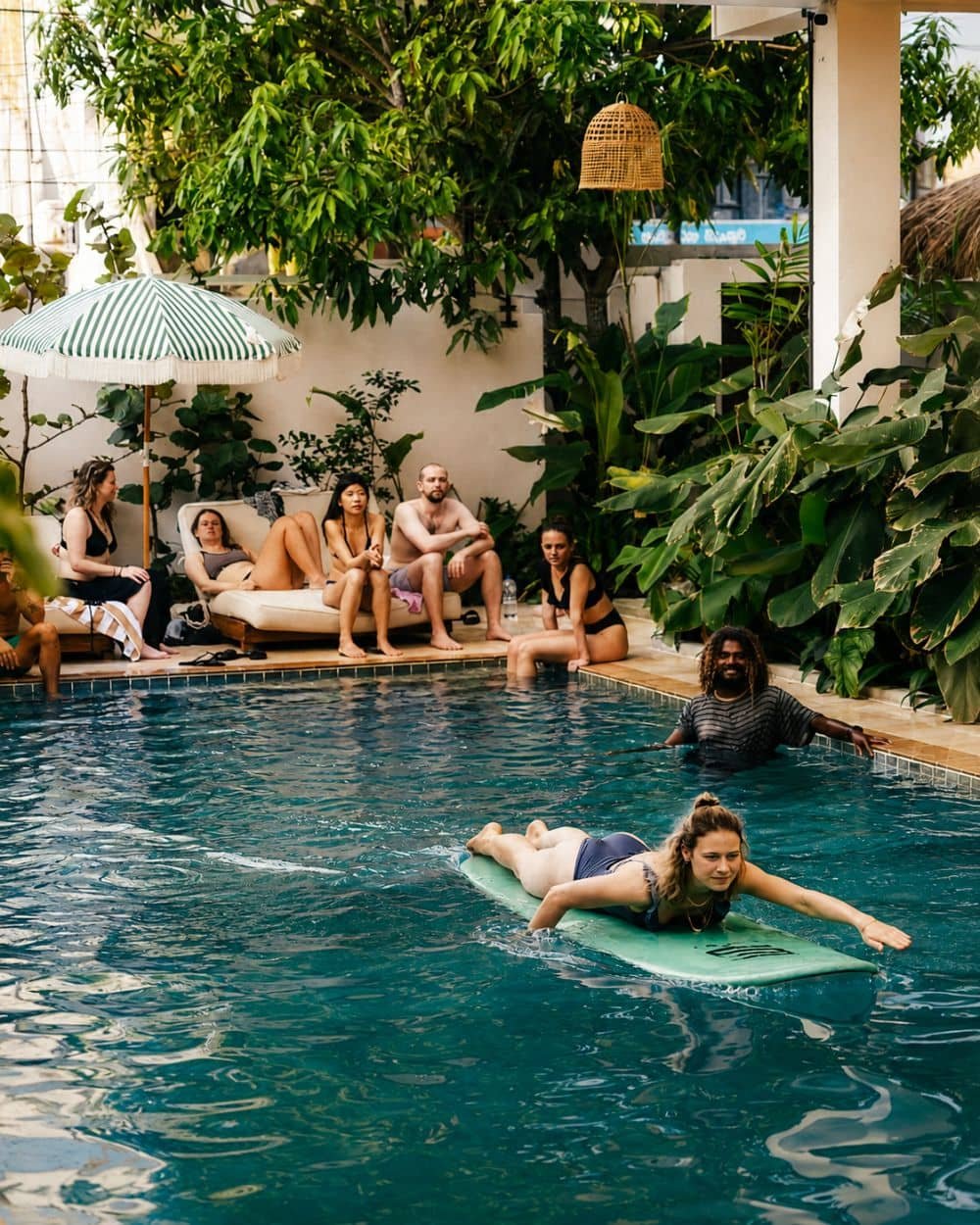
At this stage, pool sessions aren't about learning something new, they're about refining it. Turtle rolling, breath-hold work and board control all get sharper with focused practice away from the unpredictability of the ocean.
If you switch to a different board size or shape as you progress, the pool is also a good place to get a feel for it first, how it paddles, how it turns, how it responds, before taking it out to catch waves.
Understanding What You're Looking At
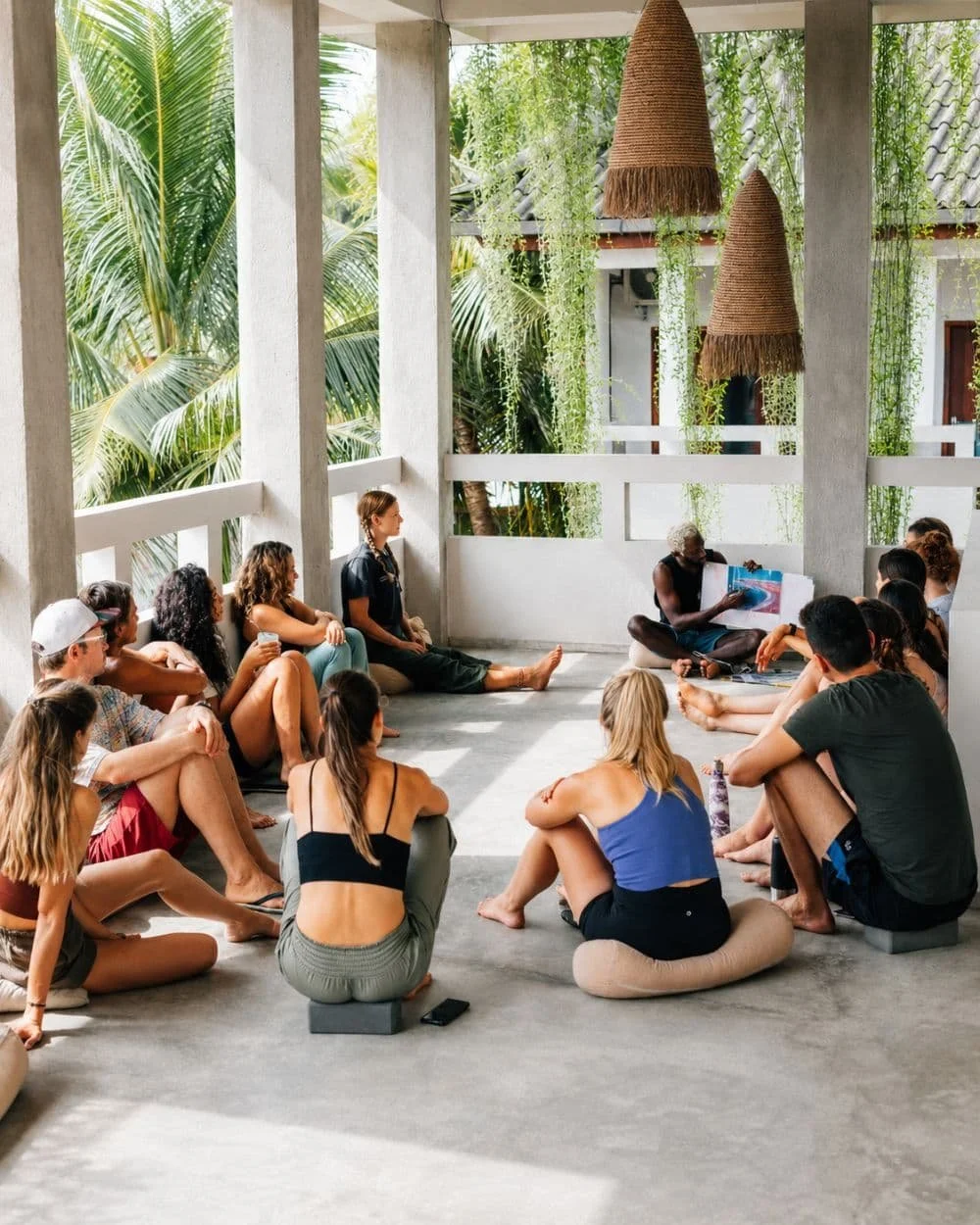
At this level, theory starts connecting what you see from the beach with what happens once you're in the water. You'll learn how to read a peak, recognise the shoulder, understand why waves arrive in sets, and judge which waves are actually worth paddling for.
These sessions connect directly to what you're working on in the water that week, and to lessons inside the Surf Academy. If your coach notices something during a session, you can explore it further in theory and continue learning through related Academy lessons, helping you understand why it happened, what to look for next time, and what to do differently when you're back in the water.
Got a question about something specific? That's exactly what these sessions are for.
Inside Layback Club
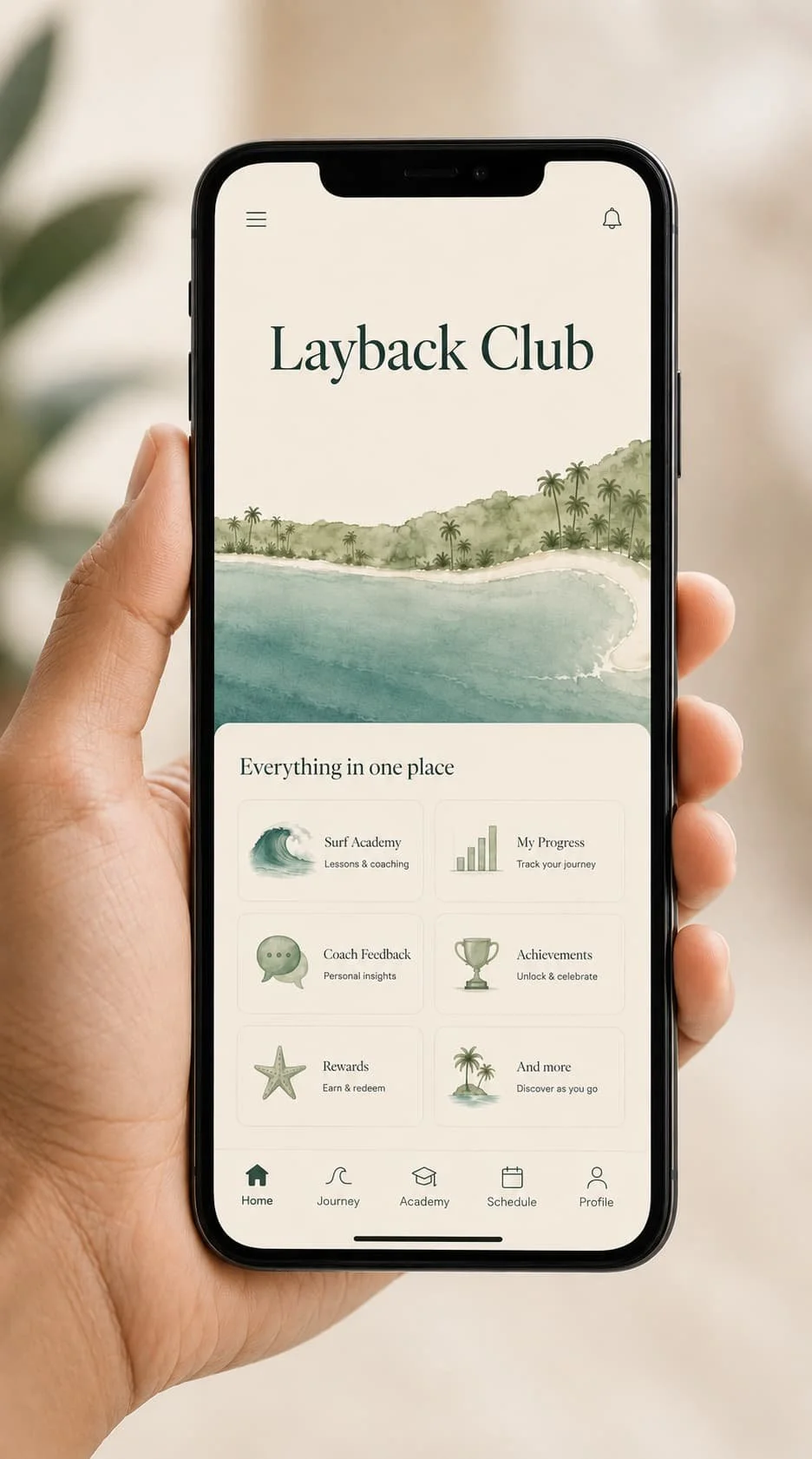
Learning green-wave surfing involves a lot of information, and your coach can't explain wave anatomy for ten minutes while a set is approaching. That's why every Layback guest gets access to our private Layback Surf Academy through Layback Club, with technical surf lessons and visual guides, alongside tools to follow your own progression.
- Your Surf LevelUnderstand where you currently sit within the Layback progression.
- Personal GoalsWork towards goals set by you and your coaches.
- Coach FeedbackKeep track of what your coaches want you to focus on.
- SkillsFollow the different areas of your surfing as they develop.
- AchievementsCelebrate the milestones along the way, because sometimes progression isn't moving up a level, it's finally catching that wave you've missed twenty times before.
When Am I Intermediate?
Probably later than you think. And that's okay.
Being able to stand up on a green wave doesn't automatically make someone an intermediate surfer. Independent surfing requires much more: choosing waves, positioning yourself, catching them without assistance, understanding priority, controlling your board, surfing along the open face, beginning to generate speed and change direction intentionally, and doing all of this safely around other surfers.
There's no rush to collect a label. Becoming genuinely independent is a much better achievement.

It's not about catching one green wave. It's about knowing how to find the next one
Learn to read it. Choose it. Position for it. Catch it. Surf it. And gradually start doing all of that without someone telling you what to do. That's Green Wave Progression.
Green Wave Progression FAQ
Surf group placement, coaching focus and surf locations depend on individual ability, conditions and safety. Progression timelines vary from guest to guest.